

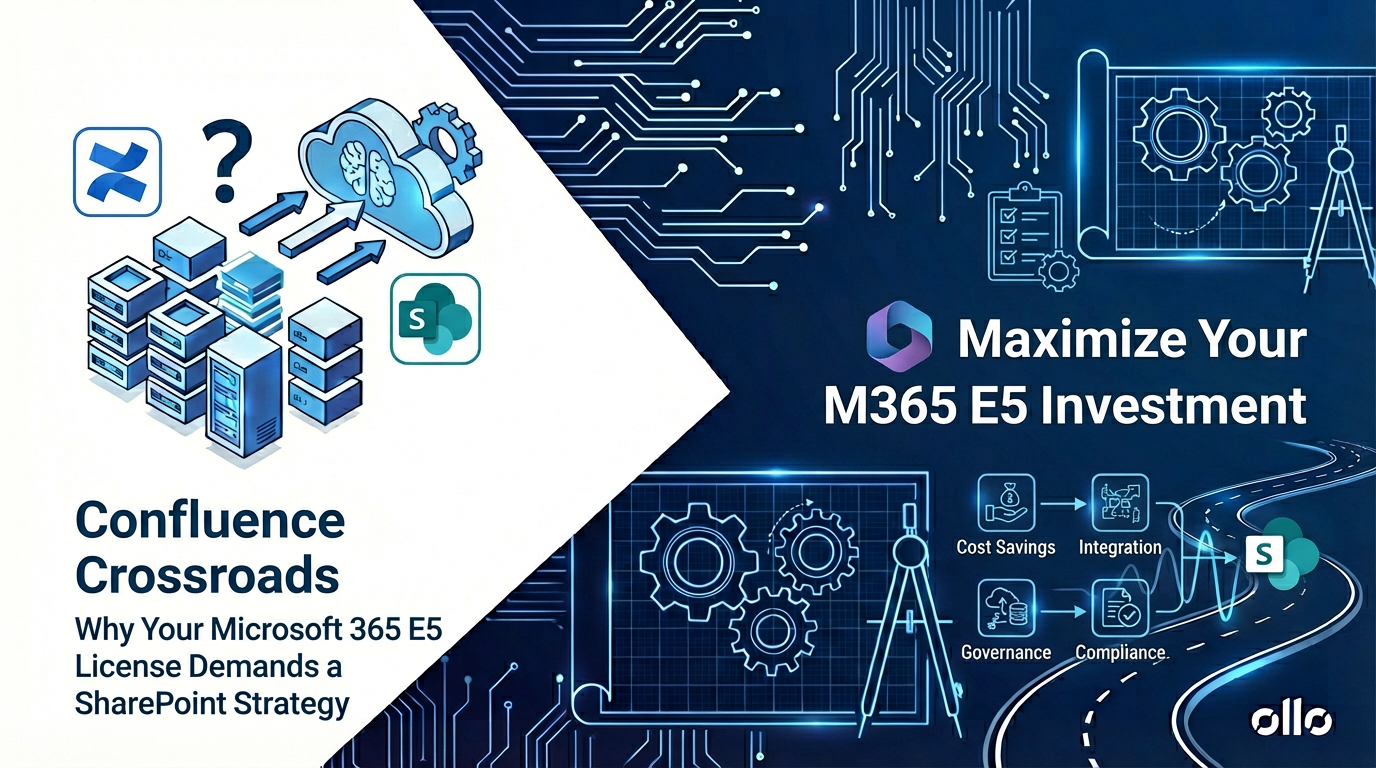

Confluence Crossroads: Why Your Microsoft 365 E5 License Demands a SharePoint Strategy
A major market shift is underway. Atlassian is strategically moving customers from its on-premises Confluence Server and Data Center products to the cloud. For thousands of companies, this is a migration mandate. Teams that spent years building knowledge bases in Confluence now face a crossroads: move to Confluence Cloud, or move to a new platform.
For any organization invested in a Microsoft 365 E5 license, this isn't a dilemma. It's a strategic opportunity to eliminate platform sprawl, reduce costs, and build a more intelligent, cohesive digital workspace.
The E5 Paradox: Paying for a Toolbox You Refuse to Open
The "E5 Paradox" is the most common scenario we encounter. An enterprise pays a premium for the most comprehensive M365 license, giving them access to a powerful, integrated ecosystem. Yet, they continue paying separate licensing and support costs for third-party platforms like Confluence, Box, or Slack.
The historical justification is often, "Confluence was better for wikis when we adopted it." That may have been true, but the platform landscape has changed. Sticking with a legacy decision creates friction in a world where integrated platforms and AI define the next productivity wave.
When you already pay for a premium license, paying again for a redundant, siloed tool drains your budget, IT team, and security posture.
The Architectural Showdown: Confluence Connector vs. SharePoint Native
The argument for consolidation becomes clear when you compare the underlying architecture. The rise of AI assistants like Microsoft Copilot makes the difference stark. While Copilot can connect to Confluence, a connector is no substitute for native integration.
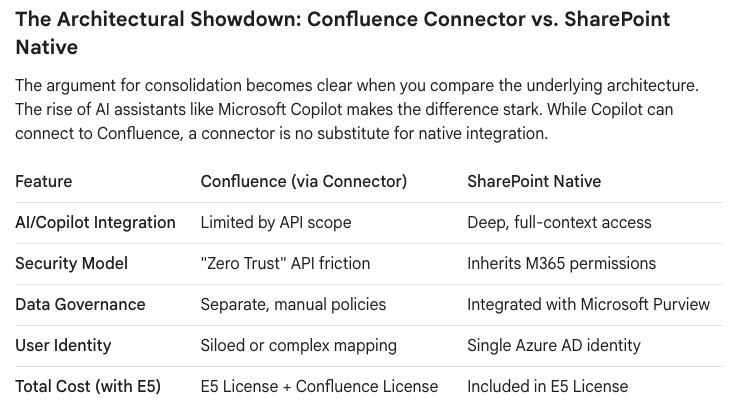
A connector-based integration is inherently superficial. It makes API calls often restricted by security and a "Zero Trust" model that rightfully hesitates to grant deep access to third-party apps. In contrast, Copilot within SharePoint is part of the native fabric. It understands the full context of the Microsoft Graph—the user's identity, permissions, and the relationship between documents, sites, and conversations.
You don't just get search results; you get intelligent, context-aware answers from a system designed to work as one.
Debunking the "Eggs in One Basket" Fallacy
A common objection to platform consolidation is avoiding vendor lock-in. "We don't want all our eggs in one basket," leaders say. "What if Microsoft has an outage?"
The trap is mistaking platform diversity for true resilience. If a hyperscaler like Microsoft Azure has a major outage, the entire business world feels the impact. Your team using Slack won't be collaborating with clients dependent on the Microsoft ecosystem.
The real risk isn't a provider outage; it's the architectural fragility created by stitching together disparate systems. Each new platform adds another failure point, another team to train, another security model to manage, and another API to maintain. This complexity doesn't make you resilient; it makes you brittle.
From Migration Mandate to Strategic Modernization
The need to move off Confluence Server is an opportunity to address this complexity. By migrating that knowledge base into SharePoint Online, you aren't just moving files. You are:
- Reducing Costs: Eliminating redundant license and support fees.
- Simplifying Architecture: Reducing the platforms your IT team must secure and manage.
- Unlocking AI Value: Placing corporate knowledge where Copilot can fully leverage it.
- Improving Governance: Applying a single set of security and compliance policies through Microsoft Purview.
The Confluence crossroads is a pivotal moment. You can lift and shift to another cloud silo, or you can choose to consolidate and finally unlock the full value of your Microsoft 365 investment.