


External Identity Architecture: B2B vs B2C User Migration
B2B and B2C user migration involves structurally mapping external identities into your target Microsoft 365 tenant. B2B relies on Azure AD Guest Accounts for partner collaboration, while B2C requires dedicated identity endpoints. Migrating these correctly prevents massive data exposure.
The reality we found during Tenant-to-Tenant (T2T) migrations is that external users are the most dangerous "Grey Zone." You are merging security boundaries, not just files. If you handle external identities poorly, you will grant competitors access to your internal data.
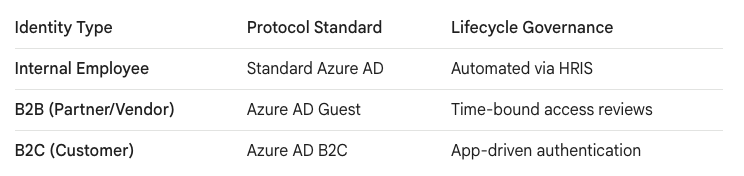
The trap most Architects fall into is treating a partner agency (B2B) the same as a retail customer (B2C). They are fundamentally different architectural challenges requiring distinct governance lifecycles.
B2B: Managing the Guest Lifecycle
B2B (Business-to-Business) collaboration is built on Azure AD B2B collaboration. This protocol creates a Guest Account in your directory. The guest authenticates against their home tenant, but you control their access to your SharePoint sites.
When migrating, legacy systems often use fragile "Anonymous Sharing Links" or direct local accounts for partners. You must use PowerShell to hunt down these orphaned sharing links across the source environment.
We programmatically convert these links into formal Guest Accounts in the destination. This replaces uncontrolled access with a structured, auditable identity.
B2C: The Customer Identity Boundary
B2C (Business-to-Consumer) is an entirely different beast. You do not want thousands of retail customers cluttering your primary Azure AD. B2C requires a separate identity service, like Azure AD B2C, designed for massive scale and custom authentication (social logins).
Migrating B2C users requires intricate API scripting to move user credentials, profile data, and consent records without forcing a password reset if possible. It is a strict database migration, completely isolated from your internal SharePoint collaboration environment.
The "Grey Zone" of Ghost Owners
During M&A migrations, you inevitably encounter "Ghost Owners." These are external vendor accounts or guest links that hold ownership of critical documents but have not been active in years.
Native migration tools will simply drop this data, assuming the user no longer exists. This is unacceptable. We architect scripts to identify these Ghost Owners and map their historical permissions to a dedicated, heavily monitored Service Account.
This preserves the intellectual property while immediately severing the dead external access link.
Validating Identity in Dark Mode
Never merge external identities directly into a live production tenant. We map and provision B2B Guest Accounts in "Dark Mode."
We run automated audits against the staging environment to ensure external users only have access to the specific vendor sub-sites intended for them. We obsess over "Search Bar Leaks" here. If a B2B guest can see your internal all-company org chart, your architecture has failed.
Only after the access lifecycle protocols are validated do we issue the welcome emails to the external users, transitioning them securely into the new environment.